EUGENE CARRIERE
TIMELINE
1849 : Birth at Gournay sur Marne (Seine et Oise, now Seine-Saint-Denis), January 16
1853 : Léon Carrière, the father and his family live in Strasbourg
1862: Attends the drawing courses of the municipal Art School of Strasbourg at the Château des Rohan
1864-1867: Works with the lithographers as Auguste Munch and Groskost (posters, vignettes, menus)
1868: Leaves Strasbourg for Saint-Quentin where he studies at the La Tour school and works with the lithographer Moureau. Discovers the La Tour’s pastels.
1869: Settle in Paris – seeing works by Rubens in the Louvre decides him to become a painter
1870: Enlists as soldier. Taken prisoner after the surrender of Neuf-Brisach and interned at Dresden where he visits the Gallery of Old Masters. Impressed by the Madonna of Sainte-Sixte by Raphaël.
1871: Released and returns to Strasbourg. The lithography: The Human Rights
1872: Moves to Paris
1874-1877: enters the Ecole des Beaux-Arts, Cabanel’s studio, with a grant from his birth department. In 1877 fails to gain the Prix de Rome but obtains a first prize for a sketch composition. Works in the atelier of Jules Cheret
1877-1878: Goes to London with Sophie Desmouceaux (1855-1922), daughter of a Paris tanner, works for Marcus Ward on Christmas cards
1878: Marries Sophie. Birth of his first daughter Elise (Lisbeth)
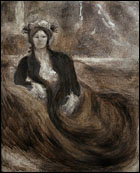
1879: exhibits The young Mother at the Salon acquired by the state ( Musée Calvet, Avignon)
1881: Birth of his first son Léon
1882: Birth of Marguerite
1884: Meets Roger Marx, the art critic
1885: The Sick Child attracts notice at the Salon, gains a medal and is bought by the state. Death of his son Léon
1886: Birth of Nelly. Exhibits The first Veil at the Salon
1887: Travels to Belgium and Holland, meets Louis-Henri Devillez, whose portrait he paints
1888: Birth of Jean-René. Works at a studio Villa des Arts, 15 rue Hégésippe Moreau, in Paris. Meets Georges Clemenceau
1889: Birth of Lucie. He is represented at the World Fair in Paris and made Chevalier de la Légion d’Honneur by Georges Clemenceau. Acquires a country residence at Parc Saint-Maur. Receives the order for a decoration of the Salon des Sciences in the city-hall of Paris.
1890: Leaves the Salon des Artistes Français and associates himself as Rodin with the Société Nationale des Beaux-Arts. Works again with lithography
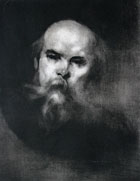
1891: One-man exhibition with Boussod et Valadon. Includes his portrait of Gauguin. Takes part in March in a farewell banquet for Gauguin before his departure for Tahiti. Gauguin offers him a selfportrait. Paints the portrait of Verlaine, exhibited at Durand-Ruel, and Alphonse Daudet, the writer
1893: La Famille acquired for the Musée du Luxembourg. Receives the order of a pannel for La Sorbonne, the university of Paris. Visits Brittany. Travels to Guernesey with Rodin
1894 : Lithographs for L’Estampe Originale. Beginning of the Dreyfus Affair
1895-1905: founds the Académie Carrière attended by Matisse, Derain, Puy, Zuloaga and others
1896: Writes the preface for the Art Nouveau exhibition at the Gallery Bing. Exhibits in Geneva at Musée Rath with Rodin and Puvis de Chavannes and in Brussels (Salon de la Libre Esthétique). First of a regular series of winter visits to Pau till 1902 where he meets the poet Francis Jammes
Makes the portrait of Rodin
1897: Makes the poster of the newspaper L’Aurore, order of his friend Georges Clemenceau. Paints Christ en Croix. Exhibits at the Continental Gallery in London
1898: Travels in Spain with Devillez
1899: Birth of Arsène. Travels in Anvers with Jean Dolent.
1900: Exhibits at the World Fair and makes the 2 posters : The Miner and the fonder. Makes the poster for Rodin’s exhibition Place de l’Alma and writes the preface of the catalog. He is made Officier de la Légion d’Honneur.
1901: Makes a lecture at the Museum d’Histoire Naturelle in Paris: L’Homme visionnaire de la Réalité
1902: Meets Elie Faure. Undergoes the first operation for cancer of the throat. Paints Fantine for the Centenary of Victor Hugo
1903: Exhibition at the Gallery Bernheim-Jeune. Becomes first President of the new-founded Salon d’Automne.
1904: Travels in Italy. In December a banquet is held in his honour with 500 guests at the restaurant Vanthier
1905: Second throat operation although Carrière is still at work on decorative panels for the city-hall of Reuilly. The cellist Pablo Casals plays for him during his illness.
1906: Dies on March 27 at his home “Villa des Arts, 15 rue Hégésippe Moreau (Paris) |